How to Collect Honest Feedback With Anonymous Voting
Anonymous voting helps small teams collect candid input without turning every question into a meeting, a debate, or a permanent record. This guide shows when to use it, how to design better questions, and how to combine private polls with lightweight sharing tools.
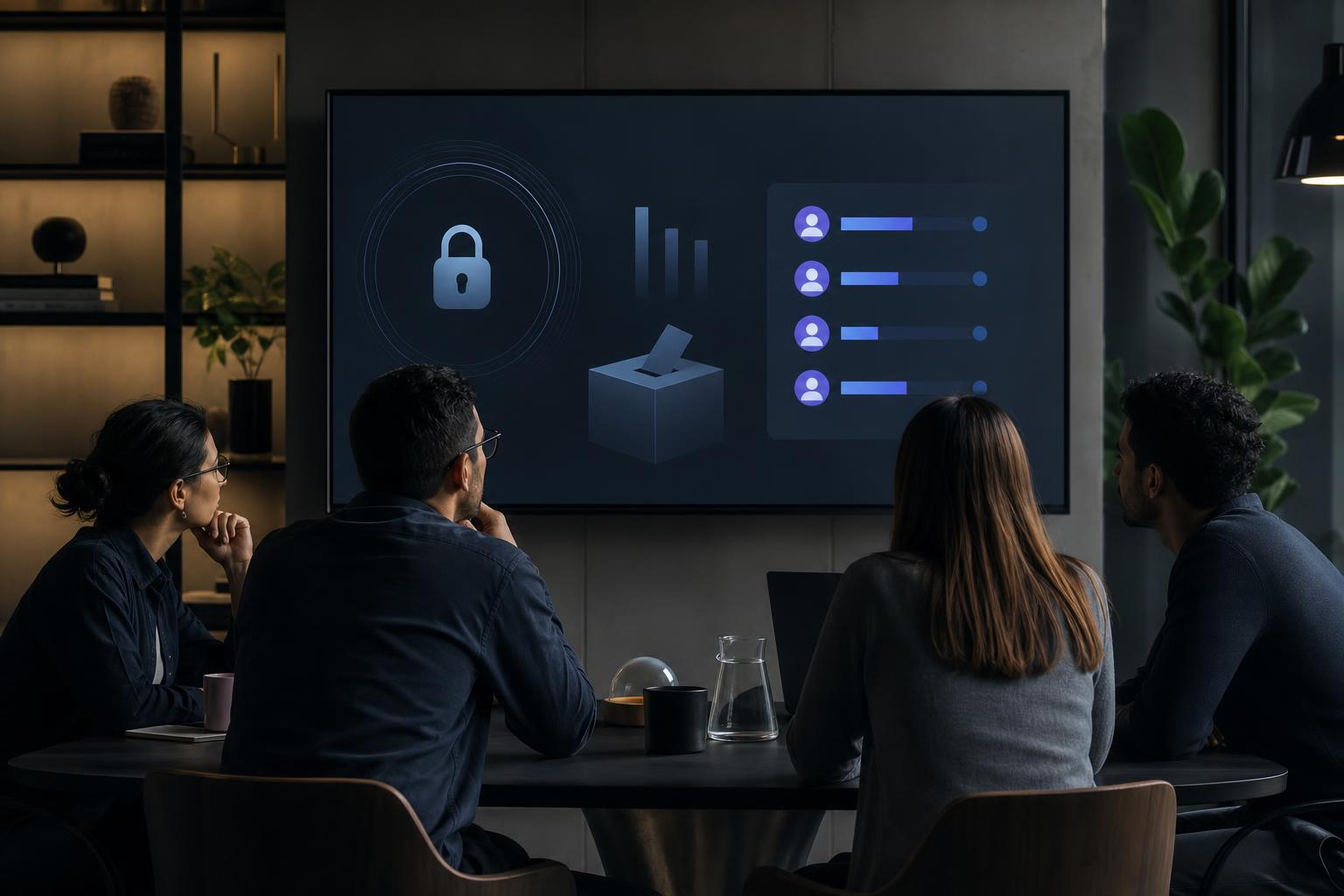
Why anonymous voting works for honest feedback
Honest feedback is hard to collect when every response is tied to a name, a job title, a customer account, or a social reputation. In small teams, the problem is even sharper: everyone knows everyone, and a single dissenting opinion can feel personal.
Anonymous voting gives people a safer way to answer a focused question. It does not magically solve trust problems, but it can reduce social pressure, avoid groupthink, and help teams see what people actually think before a loud discussion takes over.
For developers, founders, QA testers, operators, and privacy-conscious communities, the goal is usually not to build a giant survey program. The goal is simpler: ask a clear question, collect candid answers, make a decision, and avoid leaving unnecessary long-term residue in chat, email, or project tools.
That is where lightweight private voting links are useful. A tool like GhostPoll lets you create anonymous polls and private voting links for quick decisions, feedback checks, and sensitive team questions without forcing every response into a public thread.
When anonymous voting is the right tool
Anonymous voting is best when the question benefits from candid input and the answer can be summarized safely. It is especially useful when named responses would distort the result.
Good use cases include:
- Choosing between product directions when junior team members may hesitate to disagree with founders
- Asking whether a release feels ready from QA, engineering, support, and operations perspectives
- Prioritizing bugs, internal tools, or roadmap items without letting status decide the outcome
- Gathering feedback after an incident review or difficult sprint
- Checking whether a policy, process, or meeting format is actually helping
- Letting a private community vote on topics, moderators, events, or norms
- Asking users or testers which version of a feature feels clearer
Anonymous voting is less useful when you need follow-up ownership, detailed personal context, or auditable approvals. For example, a deployment sign-off, legal approval, access request, or security exception should usually have accountable names attached. Anonymous feedback can inform those processes, but it should not replace required review steps.
A simple rule: use anonymous voting to discover preference, confidence, risk, and sentiment. Use named workflows for responsibility, authorization, and execution.
What anonymity can and cannot promise
Before asking for anonymous feedback, be precise about what you mean. Many teams use the word "anonymous" casually, but people interpret it differently.
In practice, anonymity usually means the poll results are not displayed with voter names. It does not automatically mean a system has no logs, no access controls, no metadata, or no contextual clues. If only three people are eligible to answer a question, a result can still be easy to infer. If a poll asks for a highly specific written comment, the writing style may identify the person.
For trustworthy feedback, set realistic expectations:
- Do not promise more anonymity than the workflow provides
- Avoid collecting information you do not need
- Keep questions broad enough that answers are not self-identifying
- Use private links instead of public posts when the audience is limited
- Share results at the right level of detail
- Delete or let links expire when the feedback window is over, if the tool supports that workflow
Anonymous voting is a privacy practice, not a compliance guarantee. It helps reduce social exposure, but it should be paired with careful question design and sensible sharing habits.
Start with the decision, not the poll
The fastest way to get bad feedback is to ask a vague question. Before creating a poll, decide what you will do with the answer.
Ask yourself:
- Is this a decision, a confidence check, or a temperature read?
- Who should be eligible to vote?
- Will the result be binding, advisory, or only exploratory?
- How will ties or split results be handled?
- What context do voters need before answering?
- When does voting close?
For example, "What should we build next?" is usually too broad. A better version is: "For the next two-week cycle, which one issue should we prioritize first?" Then provide three to five realistic options.
Similarly, "Is the release good?" invites fuzzy answers. A better question is: "Do you feel comfortable shipping version 1.8 to 10% of users tomorrow?" Options might be "Yes," "Yes, with monitoring," "No, block on known issue," and "Not enough information."
Good anonymous voting is not about collecting more opinions. It is about collecting usable signal.
Design questions that produce honest answers
Question design matters more than the tool. Even anonymous polls can produce weak results if the wording nudges people toward a preferred answer.
Keep each poll focused
One poll should answer one decision or feedback theme. If you ask multiple things at once, voters may agree with one part and disagree with another.
Weak: "Was onboarding clear and did the dashboard feel fast?"
Better:
- "Was the onboarding flow clear enough to complete without help?"
- "Did the dashboard feel fast enough during normal use?"
Use neutral wording
Avoid wording that signals the desired answer.
Weak: "Do you agree that the new meeting format is much better?"
Better: "How should we change the new meeting format?"
Options could include:
- Keep it as is
- Shorten it
- Make it async by default
- Return to the previous format
- Not sure yet
Include a safe dissent option
If every option implies agreement, people who disagree may skip the poll or choose the least wrong answer. Add options like "No," "Not enough information," "I have concerns," or "None of these."
This is especially important for security, QA, and operations decisions. A quiet concern can become an expensive problem later.
Limit free-text when anonymity matters
Free-text feedback can be valuable, but it is also easier to identify. If you need candid input from a small group, consider a poll first, then ask for optional comments in a separate channel.
For sensitive written feedback, you can collect notes through a private workflow. For example, a person could share a short context note using GhostNote if the message should be available briefly rather than stored permanently in chat. For more on short-lived messages, see the guide to burn-after-read notes and when they make sense.
Practical anonymous voting workflows
Anonymous voting becomes more useful when it fits into a lightweight workflow. Here are practical patterns for common teams.
Product direction for indie founders
An indie founder may want feedback from beta users without letting the loudest Discord or Slack members dominate the roadmap.
Workflow:
- Write a short context note describing the tradeoff.
- Create a GhostPoll with three to five options.
- Share the private voting link only with the beta group.
- Keep the voting window short, such as a few days.
- Publish a summary: what won, what was surprising, and what will happen next.
Example poll:
"Which improvement would most increase your weekly use of the product?"
Options:
- Faster import flow
- Better team permissions
- More export formats
- Cleaner mobile layout
- None of these
This kind of poll is not a substitute for interviews, but it helps separate actual demand from whoever comments most often.
Release confidence for developers and QA
Named release discussions can be affected by optimism, fatigue, or pressure to ship. Anonymous voting can give a clearer read on confidence before a launch.
Example poll:
"How confident are you that this build is ready for staged rollout?"
Options:
- Ready now
- Ready with monitoring
- Ship only after one fix
- Not ready
- I have not tested enough to vote
Before sharing the poll, provide relevant artifacts. Logs, config snippets, or reproduction steps can be shared using GhostPaste, which is useful for private pastebin links for code, logs, and config examples. If the team needs to exchange test files, screenshots, or recordings, GhostDrop can provide anonymous file sharing with expiring links.
If you regularly share logs or snippets during QA, the related guide on private pastebin workflows for logs, config, and code snippets covers safer habits for reducing long-term residue.
Retrospectives for small teams
Retrospectives often suffer from politeness. People may avoid saying that a process is broken if the person who created it is in the room.
A lightweight anonymous poll before the retro can reveal where to spend the conversation.
Example poll:
"Which area most needs improvement next sprint?"
Options:
- Planning clarity
- Review speed
- Incident handling
- Meeting load
- Scope control
- Nothing urgent
You can follow with a second poll:
"How safe did it feel to raise concerns this sprint?"
Options:
- Very safe
- Mostly safe
- Mixed
- Not safe
- Prefer not to say
The point is not to replace discussion. It is to start the discussion with a more honest map of the room.
Hiring panels and group decisions
Anonymous voting can help reduce anchoring in group evaluations. If the most senior person states a strong opinion first, others may conform. A private vote before discussion can preserve independent judgment.
Example workflow:
- Each interviewer submits an anonymous recommendation before the debrief.
- The group reviews the distribution.
- Interviewers discuss evidence, not hierarchy.
- Final hiring decisions remain in the appropriate named process.
Use caution here. Hiring processes can carry legal and organizational requirements. Anonymous voting may help structure discussion, but it should not replace documented evaluation criteria or required approvals.
Private community moderation
Community moderators can use anonymous polls to test norms before changing rules.
Example poll:
"How should we handle promotional posts?"
Options:
- Allow in a weekly thread only
- Allow with clear labeling
- Require moderator approval
- Do not allow them
- Not sure
Private voting can reduce dogpiling and make quieter members more likely to participate.
Decision criteria: should this vote be anonymous?
Use this checklist before choosing anonymous voting:
Use anonymous voting when:
- Social pressure may change answers
- The group is small enough that discussion dynamics matter
- You need an independent read before debate
- The question is about sentiment, preference, risk, or confidence
- You do not need to attach every response to a person
- The result can be shared in aggregate
Avoid anonymous voting when:
- You need accountable approval or sign-off
- The decision requires named ownership
- The feedback contains regulated, contractual, or personnel-sensitive details that require a formal process
- The group is so small that anonymity would be misleading
- The question is better handled through a direct conversation
- You cannot explain how the results will be used
Anonymous voting should increase clarity. If it creates ambiguity about responsibility, use a named process instead.
How to share poll links without creating clutter
A private poll can still become messy if the link is scattered across chat, email, issue trackers, and documents. Treat the voting link like a temporary collaboration object.
Good habits:
- Share the poll link in one primary place
- Include the deadline and purpose in the same message
- Avoid reposting results repeatedly across channels
- Close the loop with a short summary after voting ends
- Remove or archive old links when they are no longer useful
If you need people to vote without exposing their primary email address, GhostMail can be useful for temporary email addresses and disposable inboxes in testing or privacy-conscious signup flows. If a group needs to reveal choices or secrets at the same time, such as independent estimates or sealed bids, GhostPact supports simultaneous secret reveals for groups.
These tools solve different parts of the private sharing problem. The common principle is to avoid turning every temporary decision into permanent communication residue.
Common mistakes that reduce honesty
Asking the question after the decision is already made
People notice when a poll is just theater. If the outcome is already decided, say so and ask for implementation feedback instead.
Making results public too early
If voters can see early results before voting, they may follow the majority. For sensitive decisions, consider collecting votes first and discussing results after the window closes.
Offering too many options
A poll with 15 options creates noise. Narrow the choices before voting, or run a first poll to reduce the field and a second poll to decide.
Combining anonymous voting with identifiable comments
If comments are required and the group is small, the poll may not feel anonymous. Make written comments optional, or separate them from the vote.
Ignoring minority concerns
A majority vote can hide serious objections. If 70% of the team wants to ship and 30% says "not ready," do not treat that as a simple win. Ask what risk the minority sees. Anonymous voting is a signal, not a substitute for judgment.
A simple template for better anonymous polls
Use this structure when creating a poll:
Context: One or two sentences explaining the decision.
Question: A specific, neutral question.
Options: Three to seven clear choices, including a dissent or uncertainty option.
Audience: Who should vote.
Deadline: When voting closes.
Use of results: Whether the result is binding, advisory, or exploratory.
Example:
Context: We can only prioritize one reliability improvement before the next release.
Question: Which reliability improvement should we complete first?
Options:
- Add alerting for failed background jobs
- Improve import retry handling
- Add dashboard latency monitoring
- Write a rollback checklist
- Not enough information
Audience: Engineering, QA, and support.
Deadline: Friday 3 PM.
Use of results: Advisory. Final sequencing will consider effort and risk.
This template works because it tells voters what they are deciding and how their input will matter.
Turning anonymous feedback into action
The final step is closing the loop. Anonymous voting loses credibility if results disappear into silence.
A good summary should include:
- The question asked
- The winning or leading option
- Any meaningful split in the results
- What decision was made
- What will happen next
- When the team will revisit the issue, if needed
Keep the summary concise. Do not expose details that could identify voters. If the vote revealed a concern, acknowledge it and describe the next step rather than dismissing it.
For example:
"The release confidence poll showed most voters support a staged rollout, but several people selected 'ship only after one fix.' We will fix the migration warning first, then roll out to 10% with monitoring. Thanks for the candid input."
That kind of response reinforces that anonymous feedback is useful, not performative.
Final thoughts
Anonymous voting is most effective when it is specific, time-boxed, and paired with clear decision-making. It helps small teams and private communities hear quieter signals before discussion, pressure, or hierarchy distorts the result.
Use GhostPoll when you need a private voting link for honest feedback. Pair it with tools like GhostPaste for logs or snippets, GhostDrop for expiring file links, and GhostNote for short-lived private context when the workflow calls for it.
The goal is not secrecy for its own sake. The goal is better signal with less unnecessary exposure: ask clearly, collect privately, decide responsibly, and leave less clutter behind.